

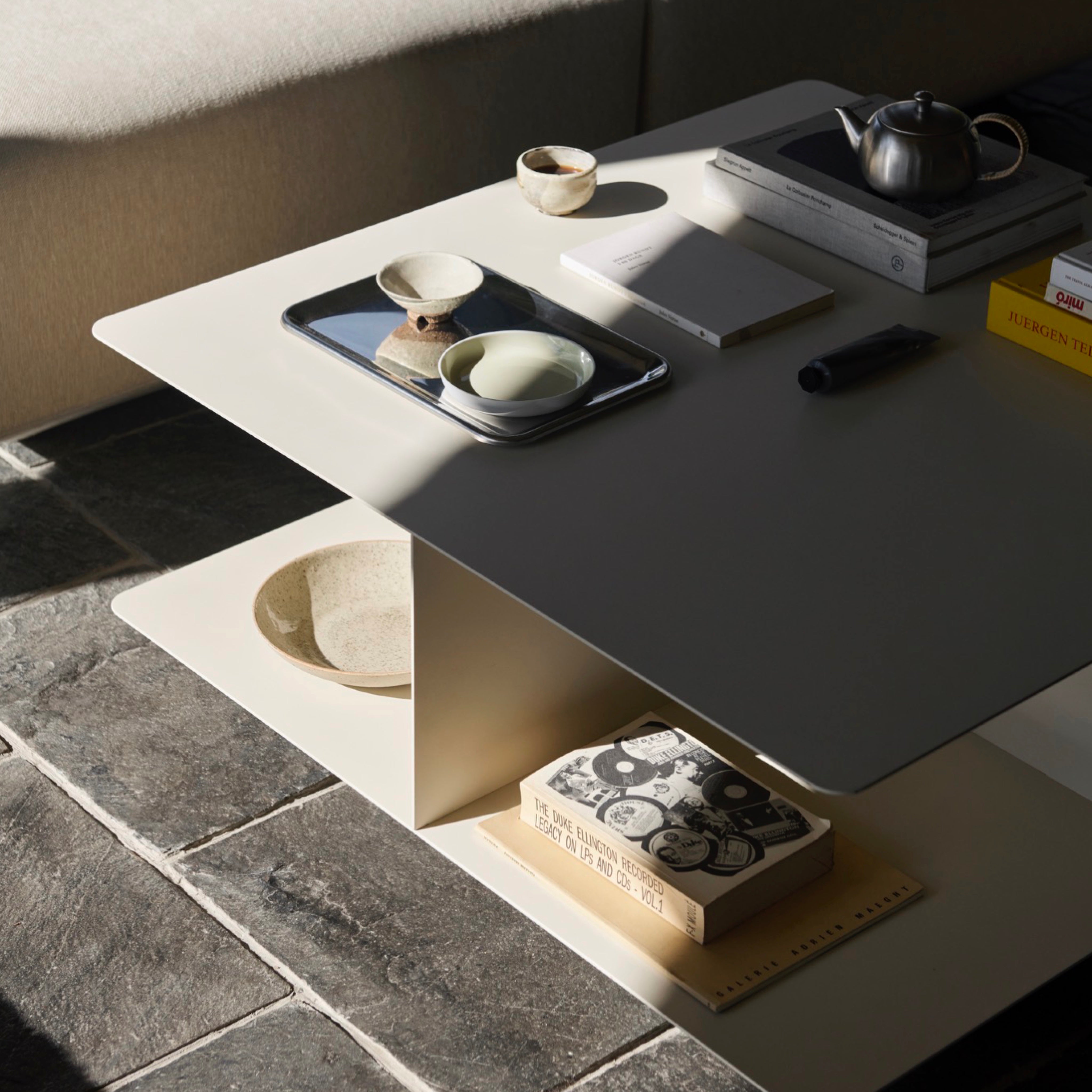

Outdoor dining furniture has to fit the space with chairs pulled out, cope with its level of weather exposure and remain manageable through winter. Planning the full arrangement avoids a table that technically fits but is awkward to use.
How much space does an outdoor dining set need?
Measure the table and chairs as an occupied setting. Allow room to pull chairs back and preserve the route to doors, steps and planting. On a balcony, check rails, drainage and any building restrictions as well as the floor area.
Use tape or cardboard to mark both the tabletop and the pulled-out chairs. Test the arrangement with the door open and with someone walking behind a seated person. A few extra centimetres of tabletop are rarely worth blocking the only easy route into the garden.
How many people should it seat?
Plan for the number who eat outside regularly, then decide how occasional guests will be handled. An extending table or extra folding and stacking chairs may be more practical than a permanently oversized set.
Which table shape works best?
Rectangular tables make efficient use of a long terrace. Round tables can improve conversation and circulation in a square area, while square tables suit compact settings. Check the leg position so each seat has usable knee room.
Which materials suit British weather?
Powder-coated metal, treated timber and outdoor-grade composites each have different care needs. No material should be assumed maintenance-free. Check the maker’s instructions for cleaning, covers, standing water, coastal exposure, frost and winter storage.
Match the material to the site, not to an idealised summer photograph. A sheltered courtyard, exposed roof terrace and coastal garden place very different demands on finishes and fastenings. Surfaces beneath trees may also need more frequent cleaning than an open paved area.
Should chairs stack or fold?
Stacking and folding designs make seasonal storage easier and let the space change use. Confirm the recommended stack quantity, folded dimensions and product weight. A chair moved frequently should be comfortable to handle as well as comfortable to sit in.
What about cushions?
Only use cushions specified for outdoor use, and follow their guidance on rain, drying and storage. Even weather-resistant textiles may last better when kept clean, fully dried and stored during prolonged bad weather.
Plan the storage volume before buying a full set of cushions. A dry bench box may be convenient for daily use, while winter storage can require considerably more indoor space. Never store cushions damp or compress them in a way the maker advises against.
What about uneven ground, wind and shade?
Check that every table and chair stands securely on the finished surface; gravel, decking gaps and sloping paving can affect stability. Lightweight furniture is easier to move but needs more thought in exposed positions. If a parasol is planned, include its base, movement and wind guidance in the layout rather than treating it as an accessory to add later.
Choosing an outdoor dining set
Plan the occupied footprint, everyday seat count and realistic storage routine. Choose materials only after considering the site’s exposure and the maintenance you are prepared to do.
Make outdoor meals easier to enjoy. Explore our outdoor furniture, or contact us to compare dining ranges.


